- Resilion
- Risks and outages
- Climate and extreme events
- Regulation and market
Climate risk is no longer just an operational concern; it now shapes financial statements, access to credit and investment decisions. Quantifying the exposure of each asset can support adaptation plans and strengthen the value of transmission companies.
Resilion8 min read
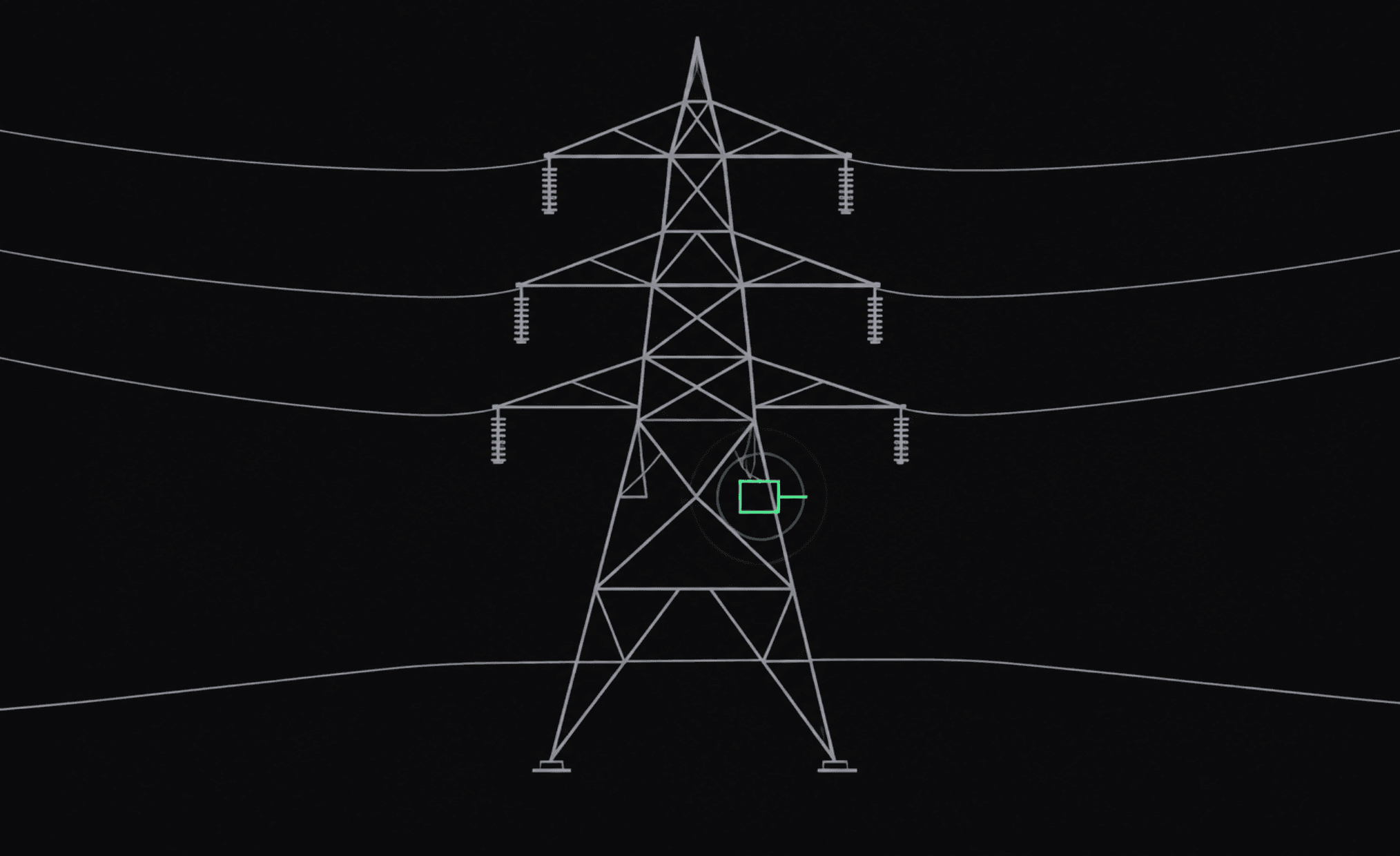
For anyone working in transmission operations and maintenance, climate risk stopped being a problem for the future a long time ago. It's the windstorm that brings down a structure, the wildfire that trips a line, the flood that cuts off access to a substation. What has changed is that the same topic has forced its way onto the agenda of the people who finance these companies. According to S&P Global, the annual cost of physical climate risk for the world's 1,200 largest companies is expected to rise from US$885 billion in the 2030s to US$1.2 trillion in the 2050s if nothing is done to adapt their assets. The power sector is among the most exposed: the average projected bill for a large company in the sector in the 2050s is US$4.6 billion a year.
These numbers show the scale of a challenge O&M teams know firsthand: climate change has already increased, and will keep increasing, the frequency and intensity of extreme events. For a long time, the business conversation about climate centered on mitigation, meaning emissions reduction. The reality of global warming has brought a second front, adaptation, to the center of the debate, and it can't wait. Every company has to understand how a changing climate affects its business and prepare plans to adapt to physical risks. S&P Global also found that only 35% of large companies had such a plan in early 2025; among utilities, 58%. That is still low, but it shows the power sector is ahead in this conversation.
Disclosure in the financial statements
An investor knows a company by what it publishes, and the central document is the financial statements: balance sheet, income statement, cash flow statement and notes, all audited and prepared under common rules. For years, climate risk showed up, when it showed up at all, somewhere else: the sustainability report, which was separate, voluntary and hard to compare. Capital markets regulators have started to bring the two worlds together.
The most important move came from the IFRS Foundation, which is responsible for the international accounting standards that listed companies in more than 140 jurisdictions, Brazil included, already follow. In 2021, the foundation created the ISSB (International Sustainability Standards Board), which in June 2023 published IFRS S1, with general sustainability requirements, and IFRS S2, dedicated to climate. The core idea: climate information should serve the same audience as the financial statements, come out at the same time and tie in with the numbers on the balance sheet.
IFRS S2 asks a company to explain which climate risks affect its strategy, how it manages them and which metrics it uses to track progress. It distinguishes transition risks, tied to the move toward a low-carbon economy, from physical risks, which are either acute (storms, floods, fires) or chronic (gradual temperature rise). For these risks, the company must describe current and anticipated financial effects, test its resilience with scenario analysis and report the amount and percentage of vulnerable assets. We will come back to these points.
The standard applies to fiscal years beginning in 2024 or later, but each country decides whether to make it mandatory. Australia, Japan, Hong Kong, Malaysia and Turkey already have, and the United Kingdom is on its way. Global investors already read reports in this format and tend to expect the same from Brazilian companies.
What about Brazil?
Brazil was the first country to make the ISSB standards mandatory (though it later backed off). In October 2023, the CVM, Brazil's securities regulator, issued CVM Resolution 193, setting voluntary reporting from 2024 and mandatory reporting from fiscal year 2026, based on the Brazilian versions of the standards (CBPS 01 and 02). In May 2026, however, CVM Resolution 244 pulled back: the report became voluntary again, under a "comply or explain" model. From January 1, 2027, companies that do not publish it must release a notice to the market explaining why. Those that do publish commit to doing so for at least three fiscal years, follow the standard in full and have the report assured by an independent auditor.
The rollback did not take climate risk off investors' radar, because other obligations remain in place. The Formulário de Referência, the annual document in which a listed company describes its business and its risks, requires a description of climate risk factors, both physical and transition. The standards for the financial statements themselves never mention "climate," but they require any material uncertainty to show up in the numbers and the notes: in the useful life of exposed assets, in impairment tests, in provisions and in insurance. The CVM reminded the market of exactly this after the Rio Grande do Sul floods, in Circular Letter CVM/SNC/SEP 01/2024. And under CMN Resolution 5,185 (the CMN is Brazil's National Monetary Council), banks will start reporting climate risks under IFRS S2 and will ask for information from their borrowers.
Then there is pressure specific to the sector. As we discussed in an earlier post, ANEEL, Brazil's electricity regulator, already treats resilience to extreme events as a regulatory priority. A transmission company's climate risk now appears in several documents, and they are increasingly expected to be consistent with one another. If the Formulário de Referência says physical risk is material and the notes to the financial statements mention no effect at all, auditors and regulators are likely to ask why.
The current gap: detailed, quantified risk
Most climate reports published today are narrative: they describe the events that affect the company, list the response actions and state that management is monitoring the issue. IFRS S2 asks for something harder. In paragraph 29(c), it requires the company to report the amount and percentage of its assets vulnerable to physical risks. Getting to that number takes more than knowing that "windstorms are a risk": you need to know which structures, on which stretches, are exposed to what wind intensity, and what they are worth on the balance sheet. The standard pushes the analysis down to the level of each asset.
This is standard risk-management logic, and it is the one we use at Resilion: risk is the product of hazard, exposure and vulnerability. The hazard is the climate phenomenon, with its probability and intensity at each location. The exposure is the set of assets in the path of that phenomenon and the value they represent. The vulnerability is how much each asset suffers when it happens: a tower designed for a certain wind speed, of a certain age and in a certain state of repair, won't respond the same way as another.
The standard also asks for this risk to be translated into money, looking both backward and forward. Backward means current financial effects: what climate has already cost in the fiscal year in emergency repairs, revenue lost to unavailability and insurance. Forward means the effects anticipated under different climate scenarios, usually the IPCC pathways, and what they change in investment and maintenance plans. For the investor, quantifying is not a technical detail: it is what makes it possible to compare companies and price the risk.
Few have gotten there. The UK accounting regulator, the FRC, reviewed the reports of UK utilities and found none that disclosed the percentage of vulnerable assets quantitatively; the ISSB itself put out a metric specific to the power sector for consultation in March 2026. In Brazil, the most advanced reports describe hazards and operational responses well, but still without exposure by asset, without horizons that match the useful life of the lines and without the bridge to the notes to the financial statements. The field is wide open.
Conclusion
Three takeaways stand out. The first is that the cost of climate is already in companies' earnings; it just isn't labeled as such. Variable Portion deductions (Parcela Variável, the cut to a transmission company's permitted revenue when its equipment is unavailable), emergency mobilization, structure replacement and insurance premiums are scattered across several lines of the financial statements. Consolidating these amounts by event and by type of hazard, and tracking their trend, is what turns the issue from an unavoidable cost of operations into a managed financial risk.
The second is that disclosure is coming either way, through the Formulário de Referência, the notes to the financial statements, questions from banks or the "comply or explain" rule for IFRS S2 reporting that takes effect in 2027. The choice isn't whether to disclose, but whether to do it with numbers or with adjectives. To an investor, a company that cannot quantify its exposure is a riskier one, and perceived risk has a price: it makes credit more expensive, raises the cost of capital and lowers the value assigned to the business.
The third is that adaptation has a demonstrable return. Once exposure is known asset by asset, investment in resilience stops being a generic request to "reinforce the grid" and becomes a prioritized list, with the avoided cost estimated for each intervention, a list that supports the internal decision, the request for regulatory recognition and the conversation with the market. At Resilion, we believe that adapting to climate change is a central issue for infrastructure companies, with a direct impact on their value and on the continuity of their operations. That is why we have developed, and continue to refine, methodologies to assess these risks systematically and in detail, at the level of each individual asset, such as a transmission tower. The number that says where to intervene first is the same one that sizes the risk for the company and that the investor expects to read. Much of this information already exists inside transmission companies; what is missing is organizing it in the language of the people who finance the business.